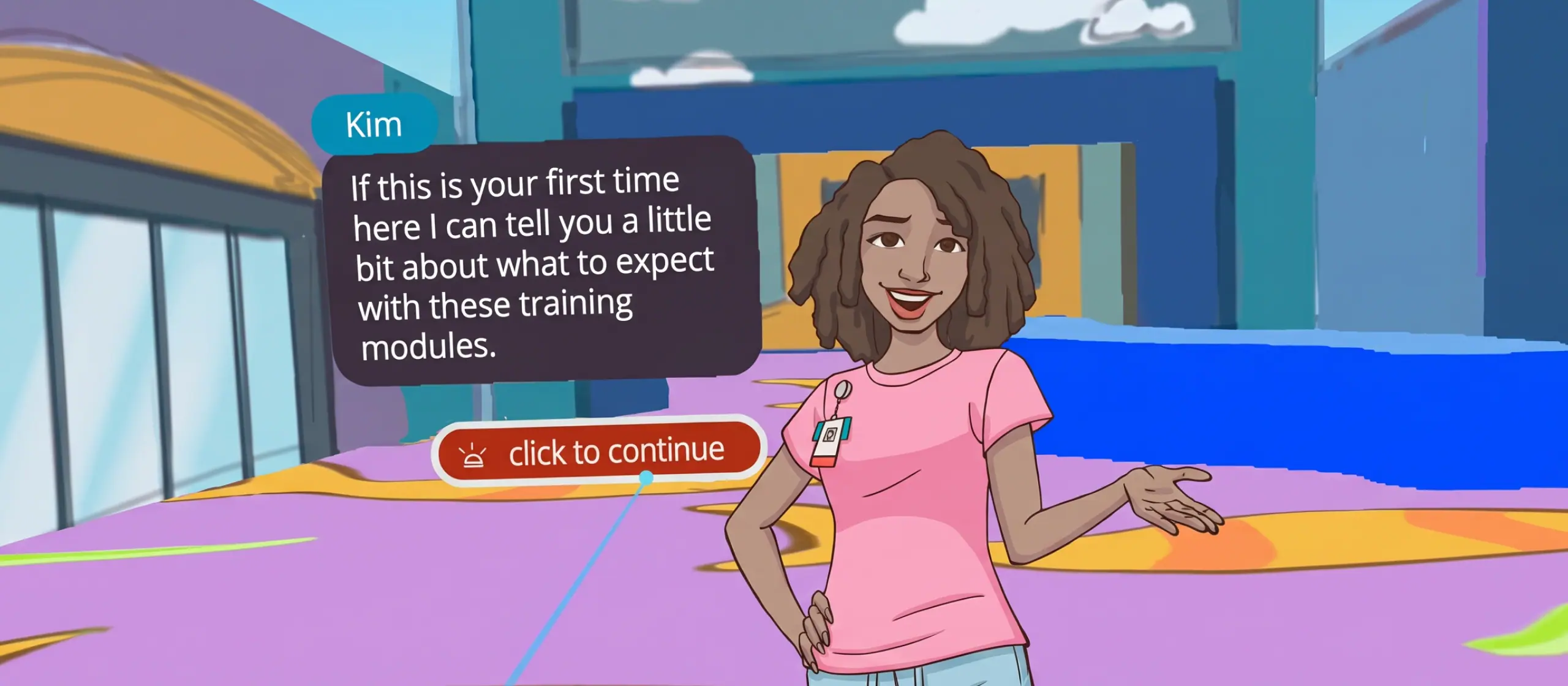
Children's Mercy Hospital partnered with VML to explore how immersive technology could help staff better understand the experiences of patients, caregivers, and fellow employees. Together, our multidisciplinary team embarked on a 10-week sprint to prototype a VR training experience that encouraged more thoughtful, compassionate communication across both clinical and non-clinical roles.
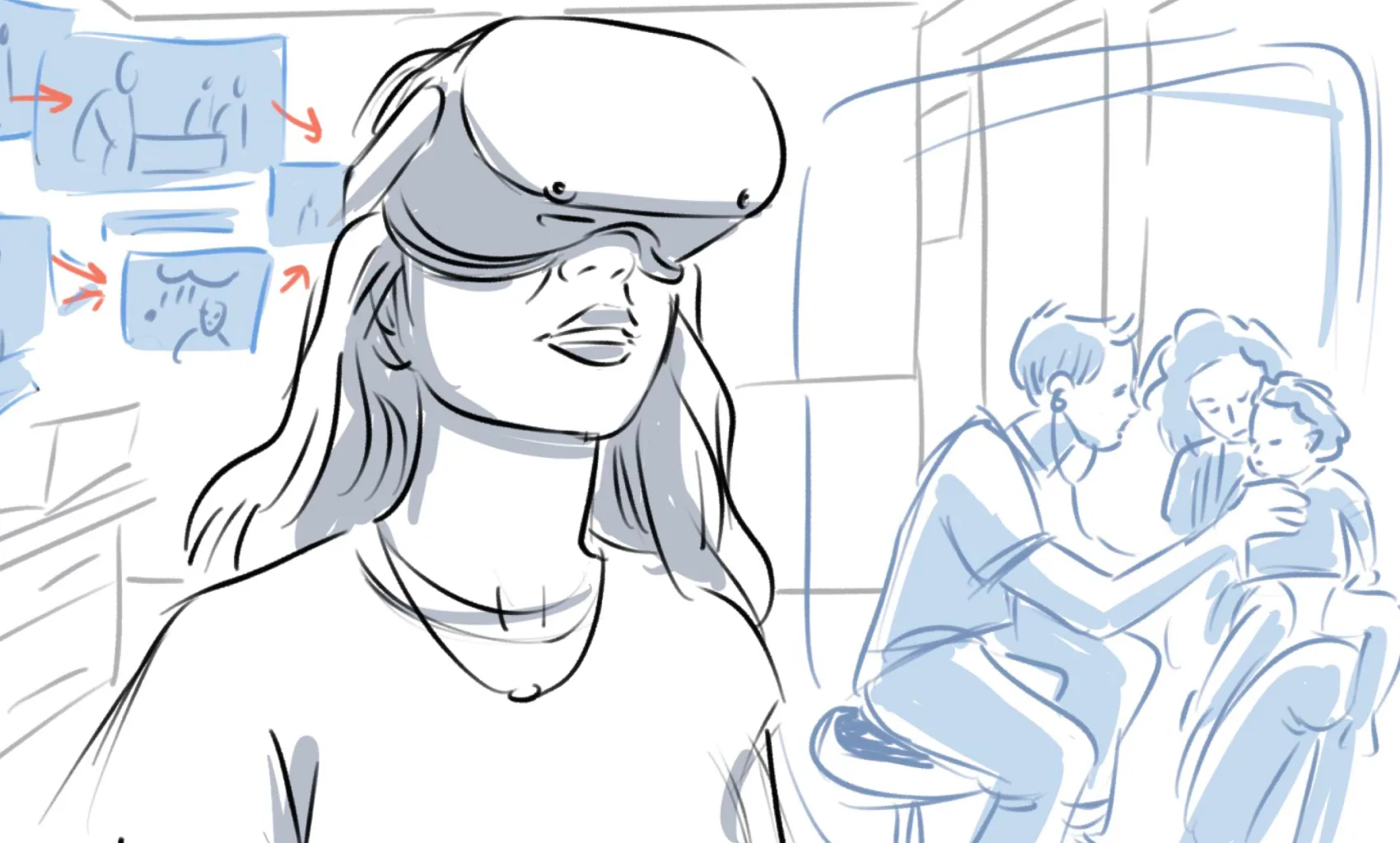
As lead designer, I helped shape the experience from concept through execution. My role included research, interaction design, storyboarding, prototyping, art direction, stakeholder presentations, and collaboration with 2D and 3D artists to bring the world to life.
Defining the Core Interaction
Rather than focusing on complex VR mechanics, I looked to an unlikely source of inspiration: visual novels and choose-your-own-adventure stories. The goal was to create an experience that anyone could learn immediately, even someone who had never put on a VR headset before, by allowing users to focus on the conversations and emotions unfolding around them rather than the technology itself.
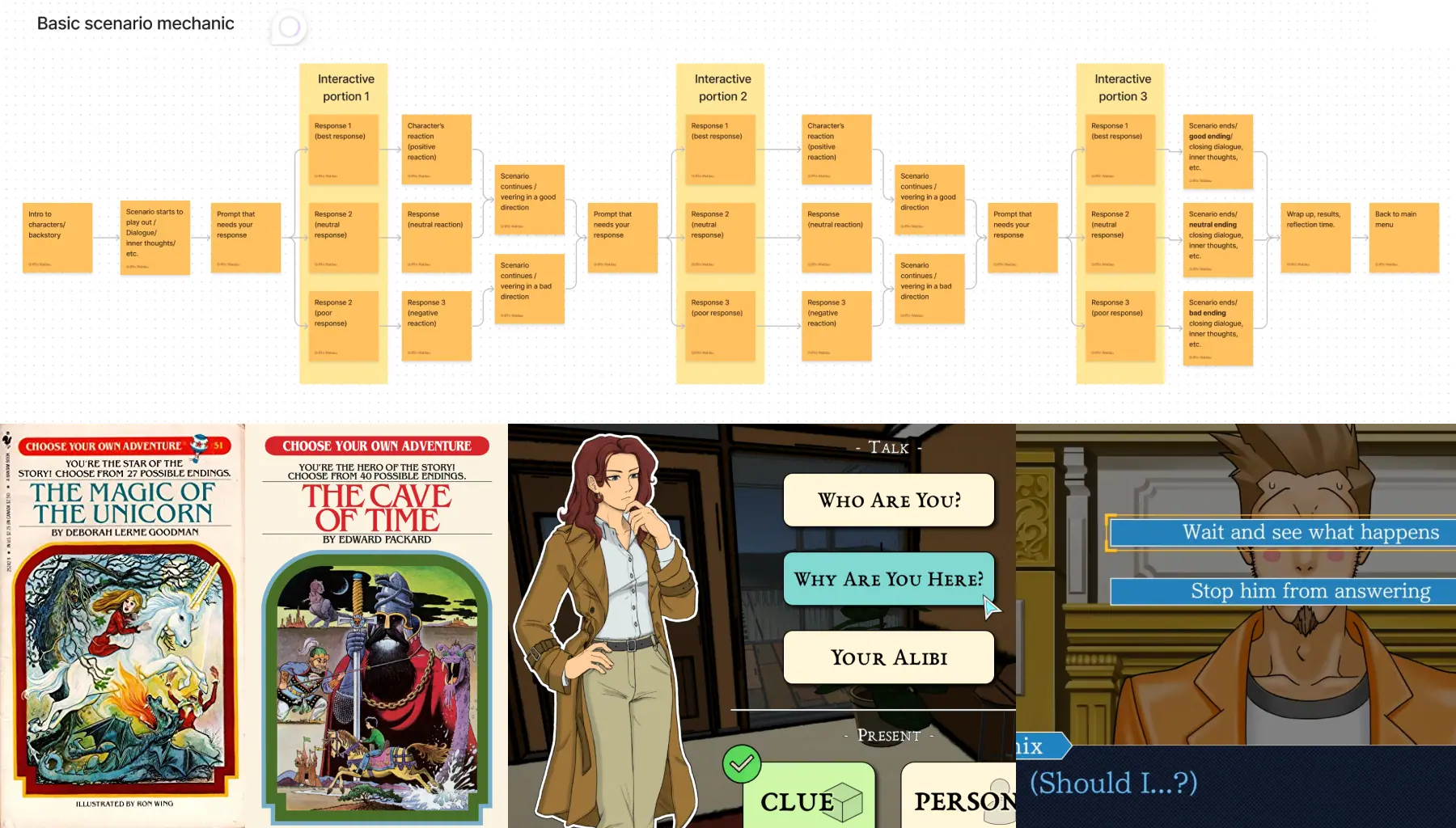
Classic point-and-click story games served as inspiration for the training module mechanics.
The training scenarios placed users in difficult conversations with patients, caregivers, and staff members, allowing them to practice responses and experience the emotional impact of their choices.
Emotional Atmosphere
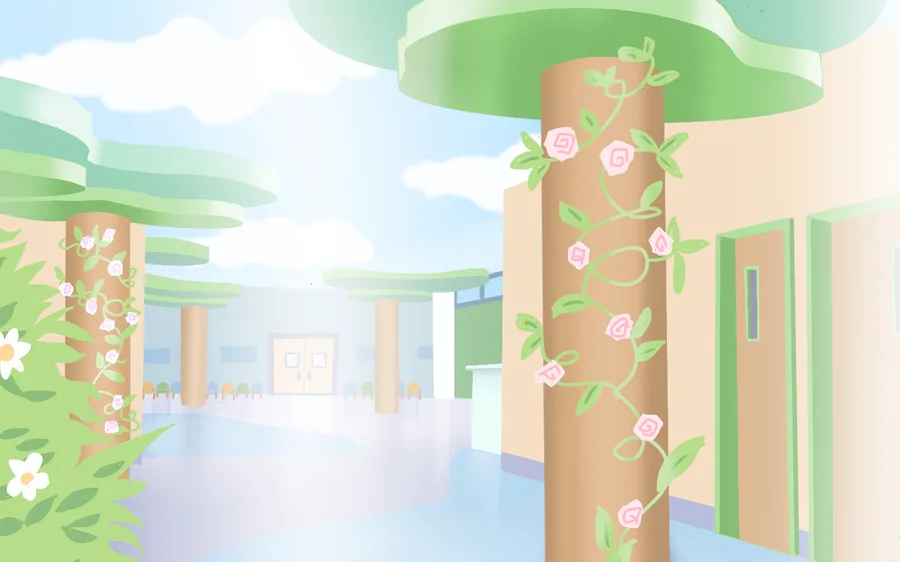
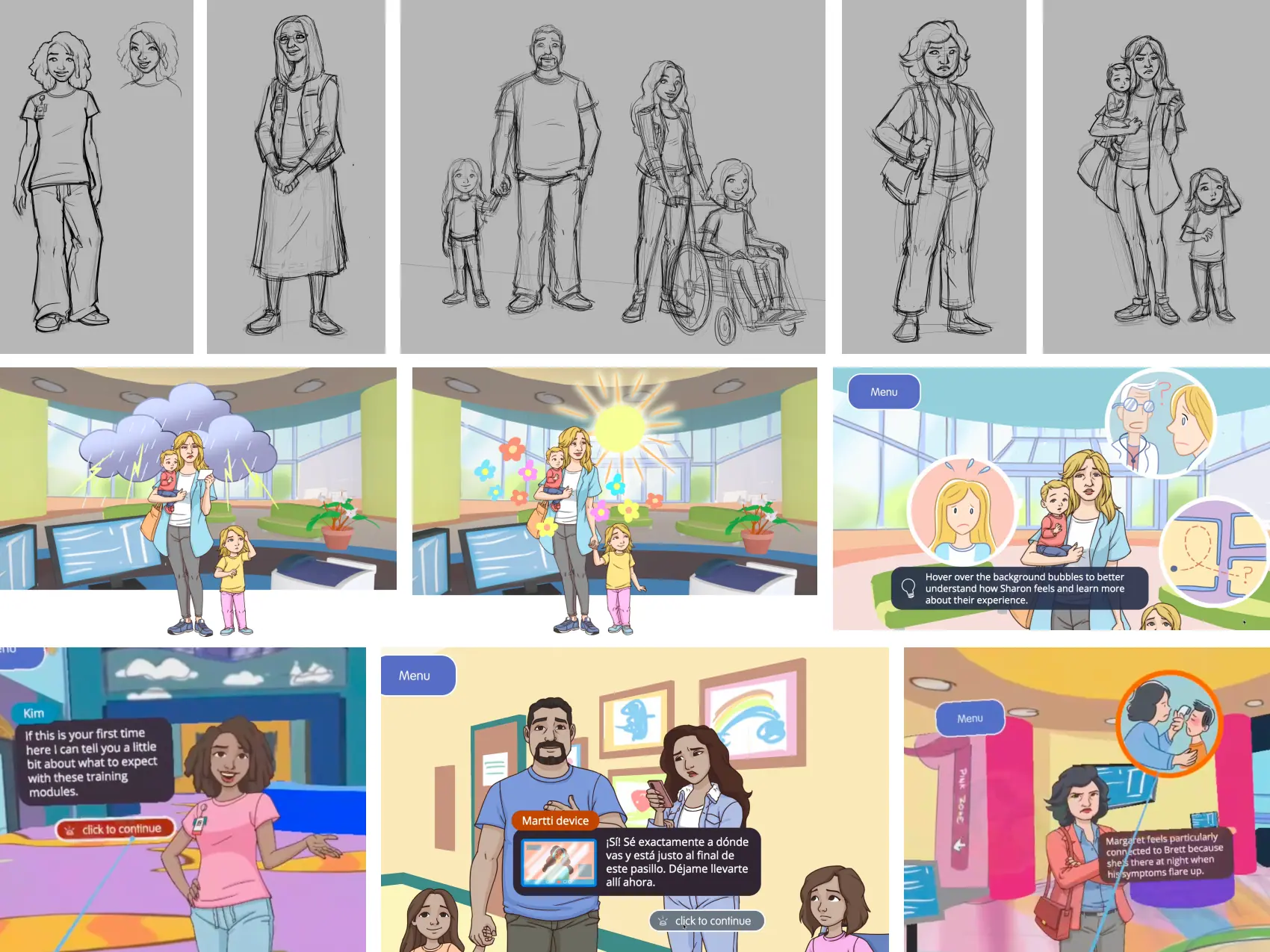
To reinforce the emotional shifts that arise from the twists and turns of a conversation, I developed a visual approach where the environment itself became part of the storytelling. Supportive responses filled spaces with warmth, light, and optimism. Poor choices resulted in darker skies, harsher lighting, and visual tension. The changing world served as an emotional mirror, helping users understand how their actions affected the people around them.
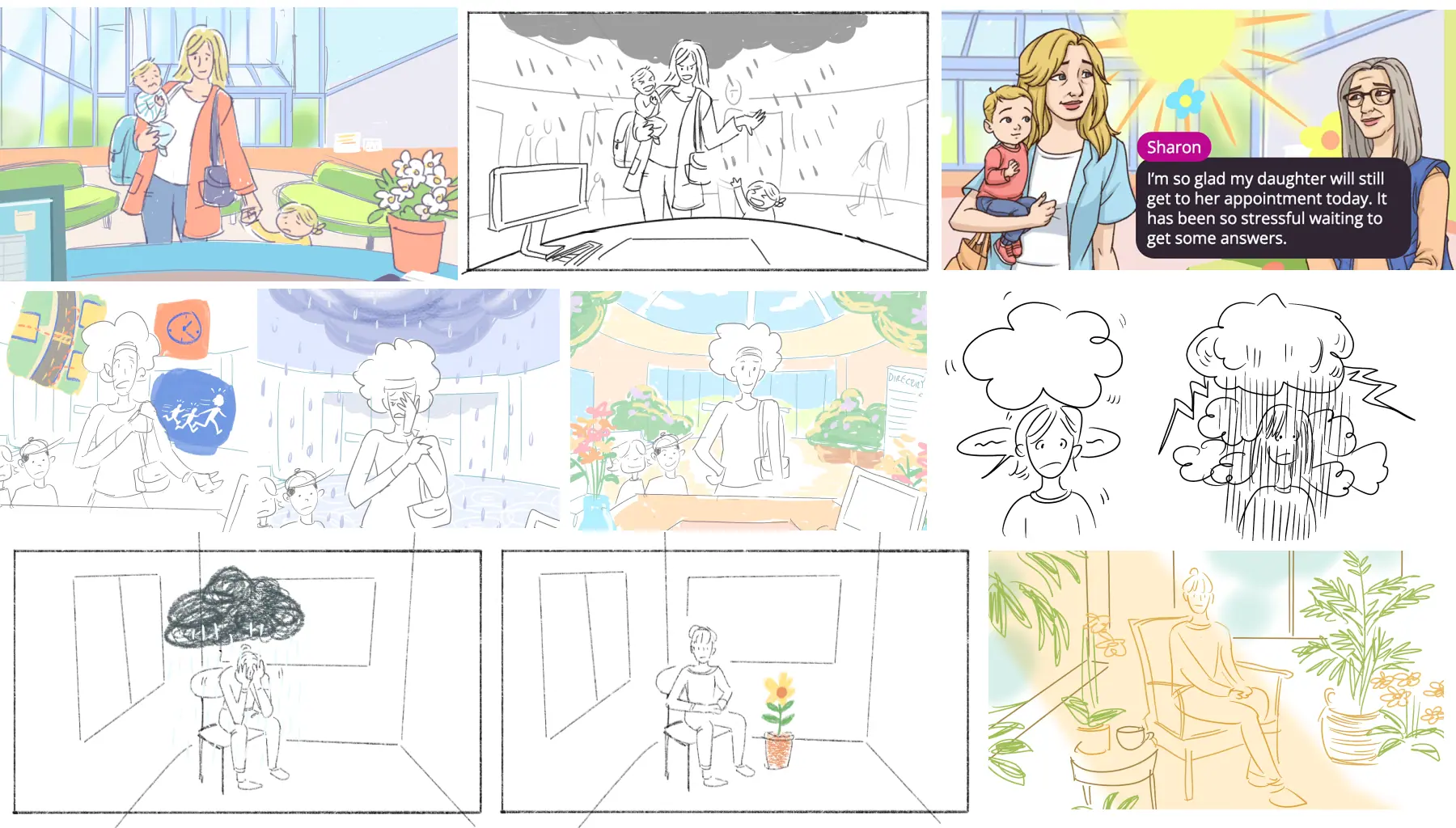
Early environmental concept sketches
Backstory Bubbles
Rather than treating each interaction as a simple branching conversation, I wanted users to understand why a character might be reacting the way they were. Every difficult interaction has a story behind it—one that isn't always visible in the moment.
To make those unseen stories visible, I developed a narrative mechanic we called Backstory Bubbles.
At key moments, the conversation could pause, allowing users to step inside the character's perspective. Visual scenes and memories would appear around them, revealing the unseen circumstances shaping their reactions: a long drive to the hospital, months spent waiting for an appointment, fear over a sick child, financial stress, language barriers, or countless other challenges that often remain invisible during a real conversation.
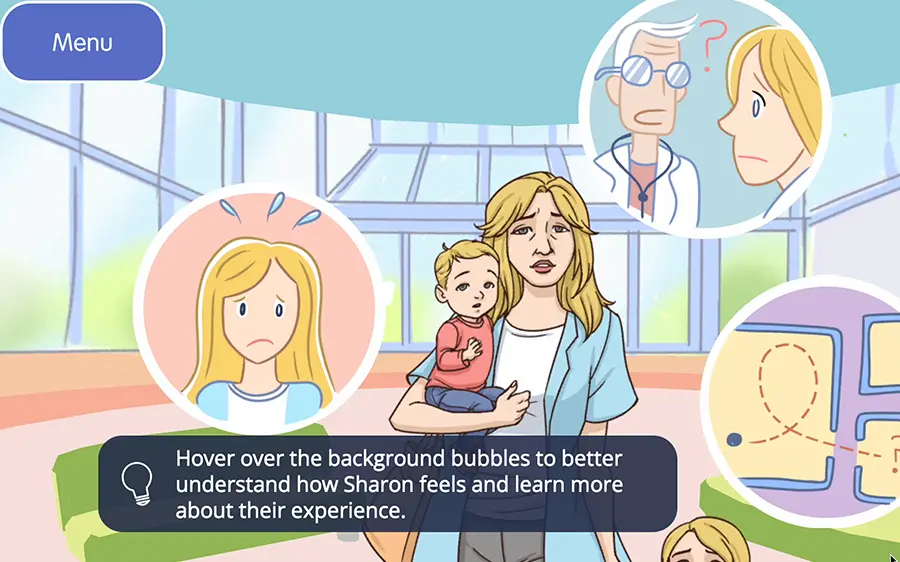
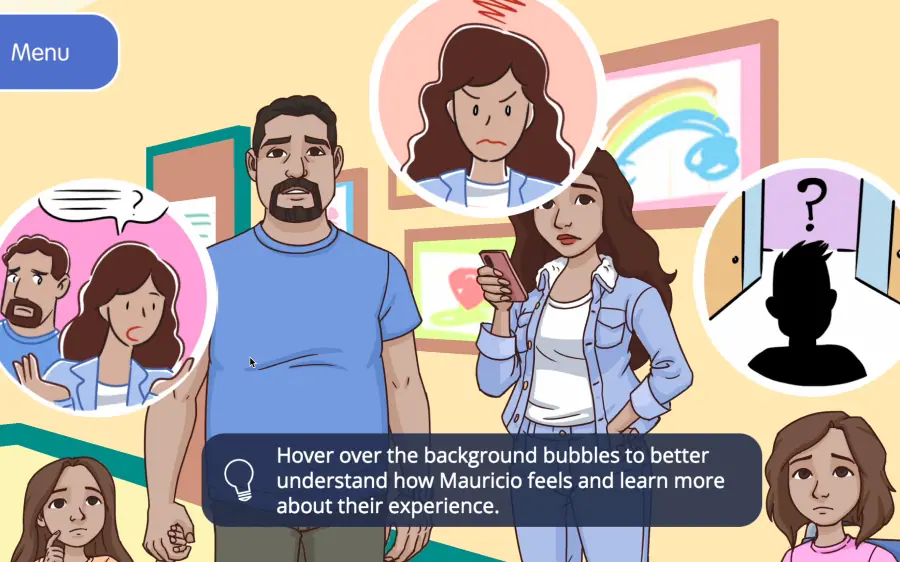
Backstory Bubbles show the hidden emotions behind the stories
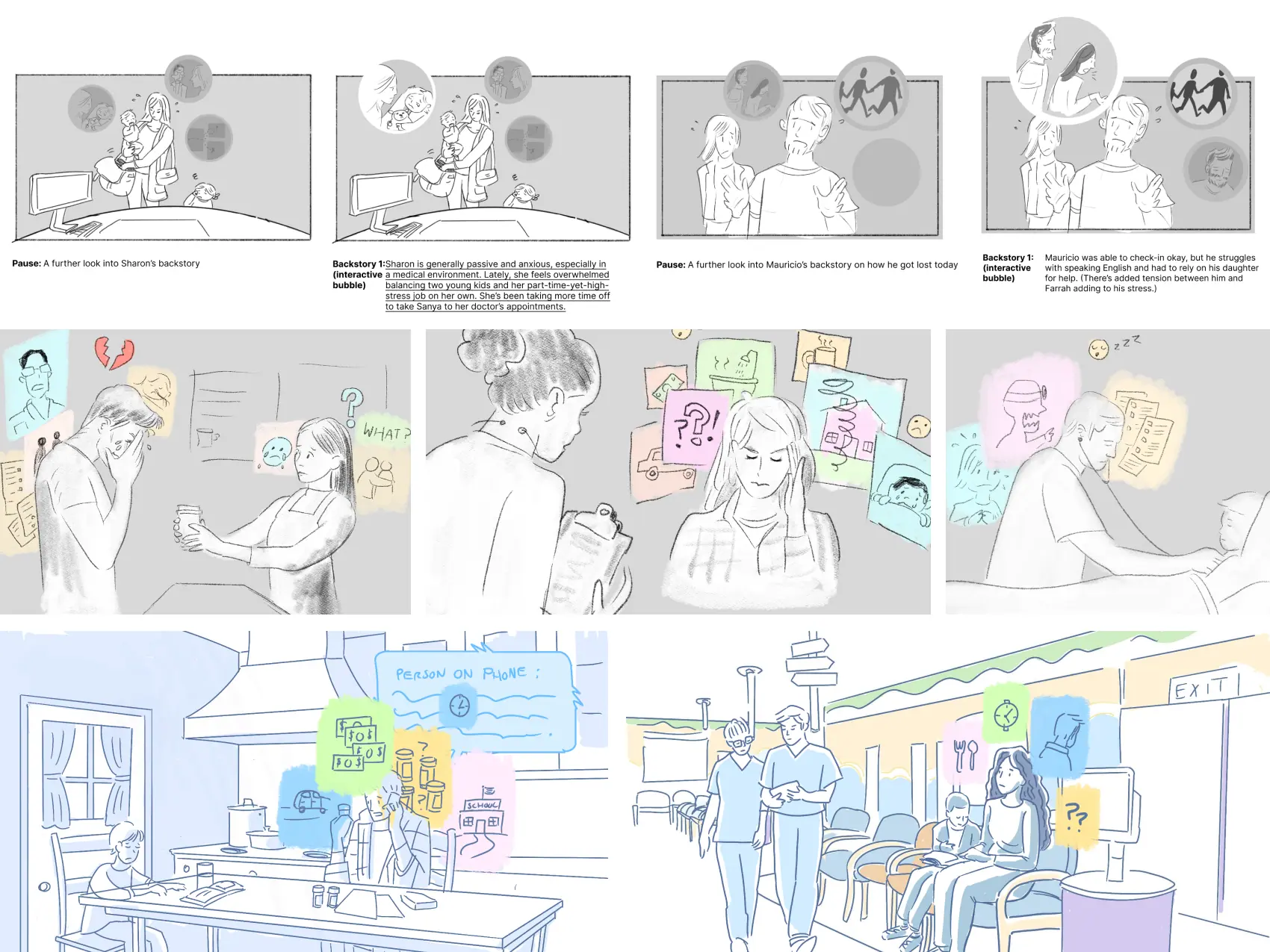
Early concept art for Backstory Bubbles
Early Prototypes
Rapid prototyping became one of the project's greatest strengths. By getting rough interactions, sketches, and scripts into the headset early, we were able to gather feedback quickly, align stakeholders, and continuously refine the experience. Watching rough ideas become immersive moments helped us push the concept further with every iteration.
Click above to play video
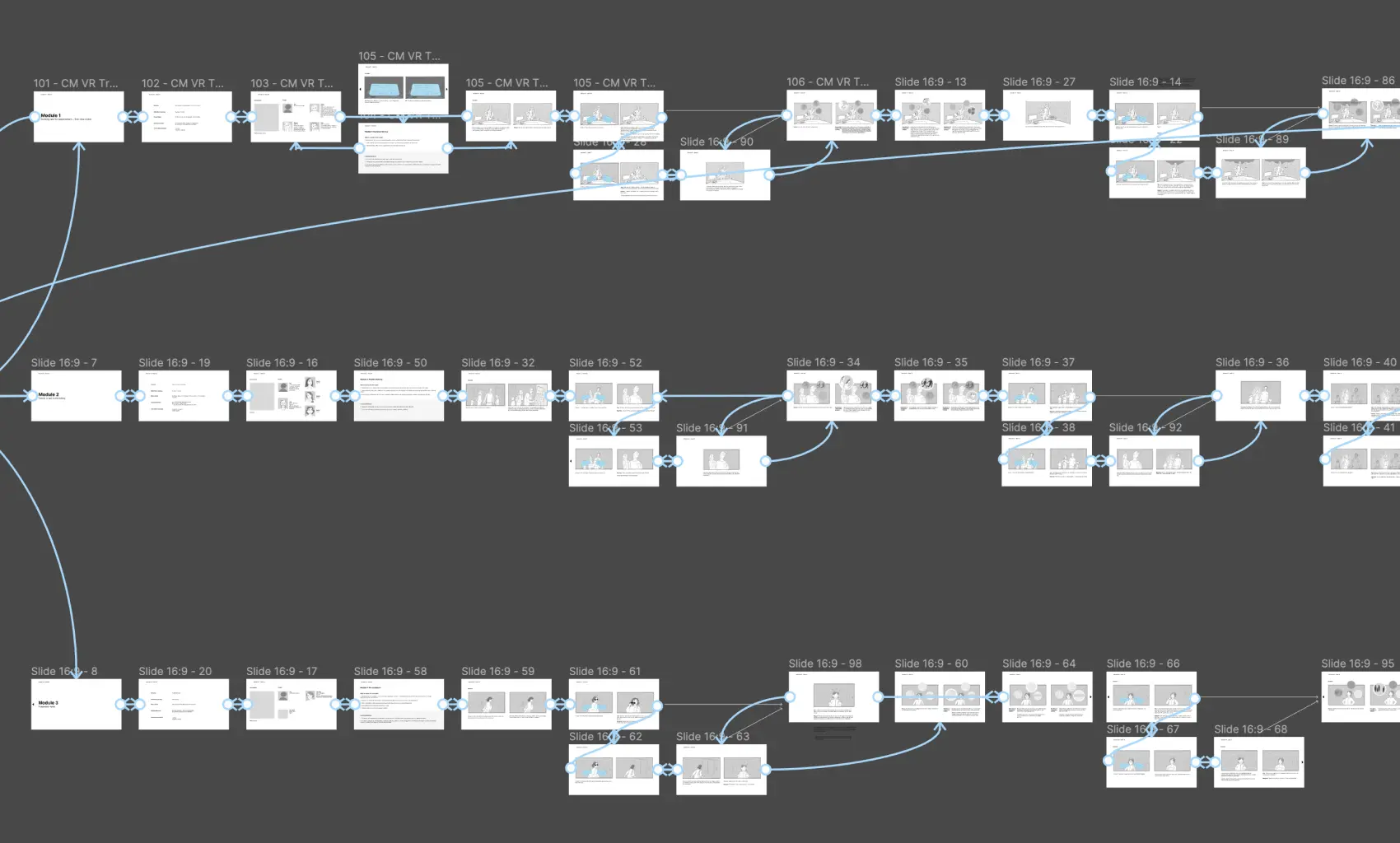
Alongside the VR prototype, I created a clickable Figma prototype that allowed us to test story beats and conversation flows while the script continued to evolve.
Art Direction
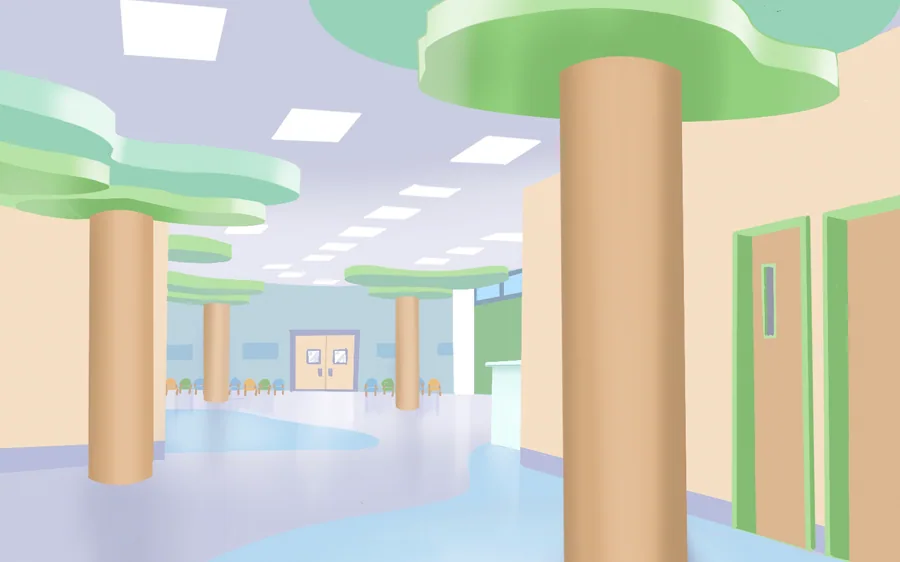
I made the decision to use expressive hand-drawn 2D characters within simple yet colorful 3D environments. Rather than compromising with low-fidelity 3D characters, this approach allowed us to focus on emotional expression, readability, and empathy—qualities that were ultimately more important to the success of the experience.
The resulting environments were inspired by real spaces within Children's Mercy while embracing a softer, more welcoming visual style designed to encourage reflection rather than stress. Final Character art by the amazing Joel Sigua.
The Final Product
The pilot experience was presented to Children's Mercy leadership and stakeholders, where it was met with enthusiastic feedback and helped spark conversations around future immersive training opportunities.
Click above to play video of the final versions of our training modules
More importantly, the project demonstrated that immersive technology isn't just capable of teaching procedures—it can also help people better understand one another. Of all the projects I've worked on, this remains one of the most meaningful because its goal was simple: helping people approach difficult conversations with greater understanding and compassion.